
Back when I was living in Paris, I used to escape to Rome at least once a year for a long weekend. I was completely in love with the city, which, to me, was the cradle of art. Rome was only an hour and a half away by plane, and flights were cheap enough to make these little escapes wonderfully affordable.
(And although I’m still very much in love with Rome, you’ll notice I speak of it in the past tense. Living in New Zealand sometimes feels like being cut off from the rest of the world, and travelling anywhere is incredibly expensive. I haven’t been back to Rome in over ten years, but I can’t wait for the day I finally return.)
My usual ritual was simple: book a cheap flight, treat myself to a beautiful hotel, rent a scooter and spend a few days exploring Rome, preferably in spring or summer, when the air smelled of warm ancient stone and trees.
I have so many stories to tell and memories to share about Rome. I genuinely believe I left a Horcrux there (a little piece of my soul, for those unfamiliar with the term ;)). I draw so much inspiration from everything I felt and experienced in this city. I actually hope to dedicate an exhibition to it one day.
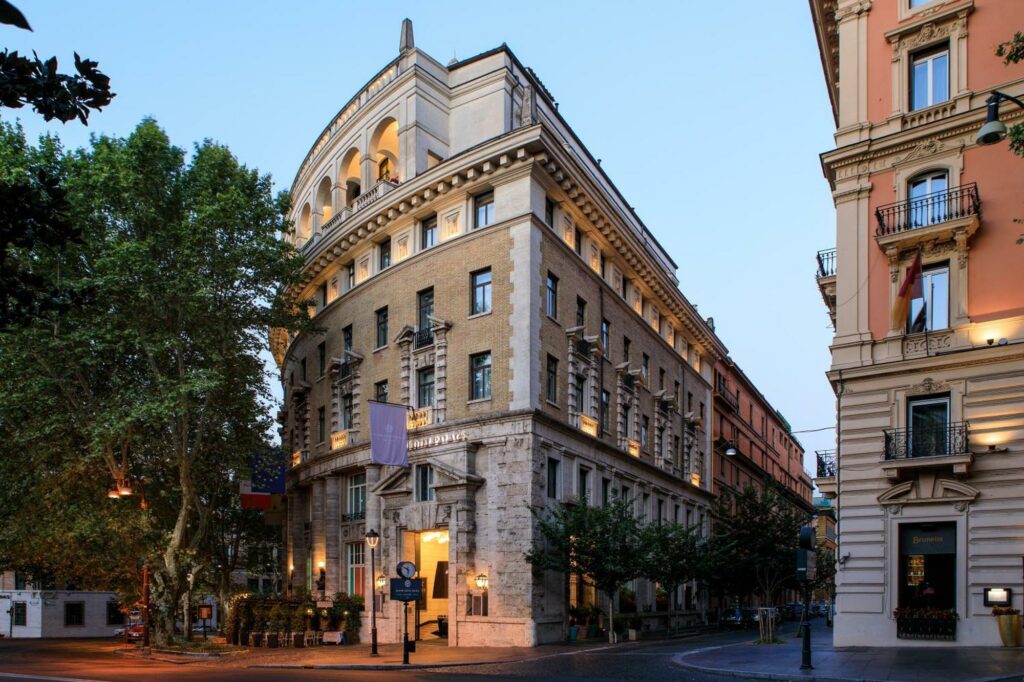
My favourite hotel at the time was the Boscolo on Via Veneto, a marvel (now the Grand Hotel Palace Rome) and a perfect nest for lovers and aesthetes.
An unexpected macabre discovery beneath an ordinary-looking church
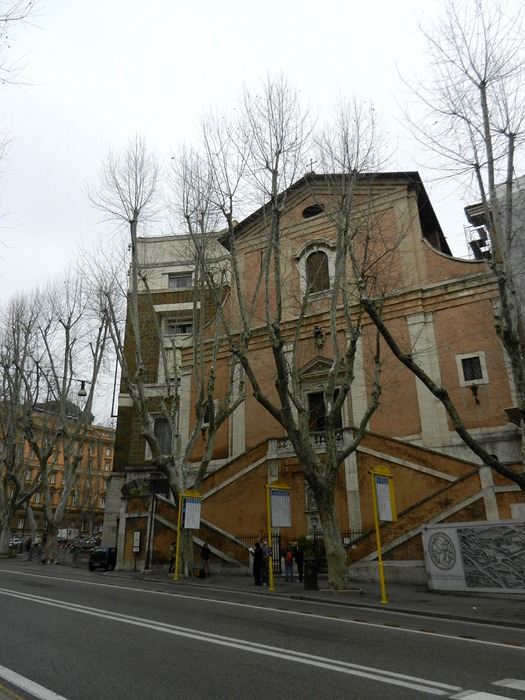
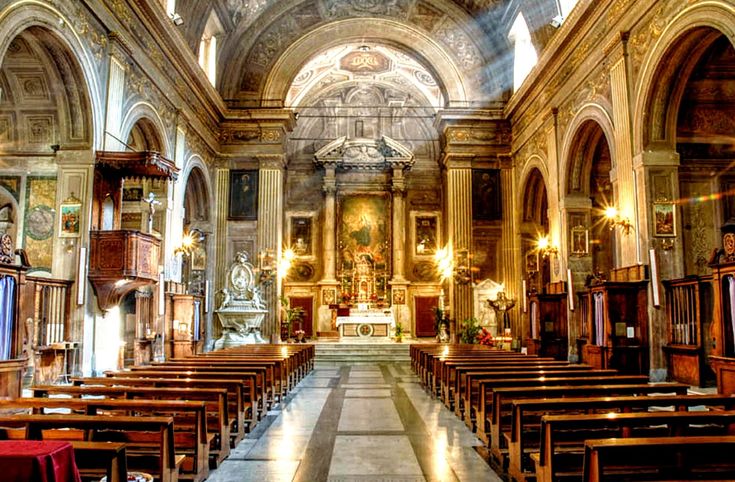
During one of my stays there, about 13 years ago, I discovered the Capuchin Crypt entirely by chance, just down the street. I had spotted it on Google Maps under the name Santa Maria della Concezione dei Cappuccini, the church above the crypt. Today, you’ll find it listed as Museo e Cripta dei Cappuccini.
I went in out of curiosity, expecting an old crypt, perhaps a few tombs. I had absolutely no idea what was waiting for me underground.
It turned out to be one of the most extraordinary and unsettling things I’ve ever seen.
A crypt adorned with the dead
For just a few euros, we were able to access the crypt via a small staircase. Below the church, a succession of small, mostly dark chambers awaited us, dimly lit by little daylight filtering through narrow windows.
I can still remember the smell as we entered. It was unlike anything I had ever encountered before. There was that familiar damp, musty smell of an old cellar or underground crypt, but something else lingered in the air. Nothing particularly unpleasant, just something strange and entirely new to me.
And perhaps that wasn’t so surprising, considering that the crypt was filled with human remains, including partially mummified bodies.
There are between 3,700 to over 4,000 friars remains in the crypt.
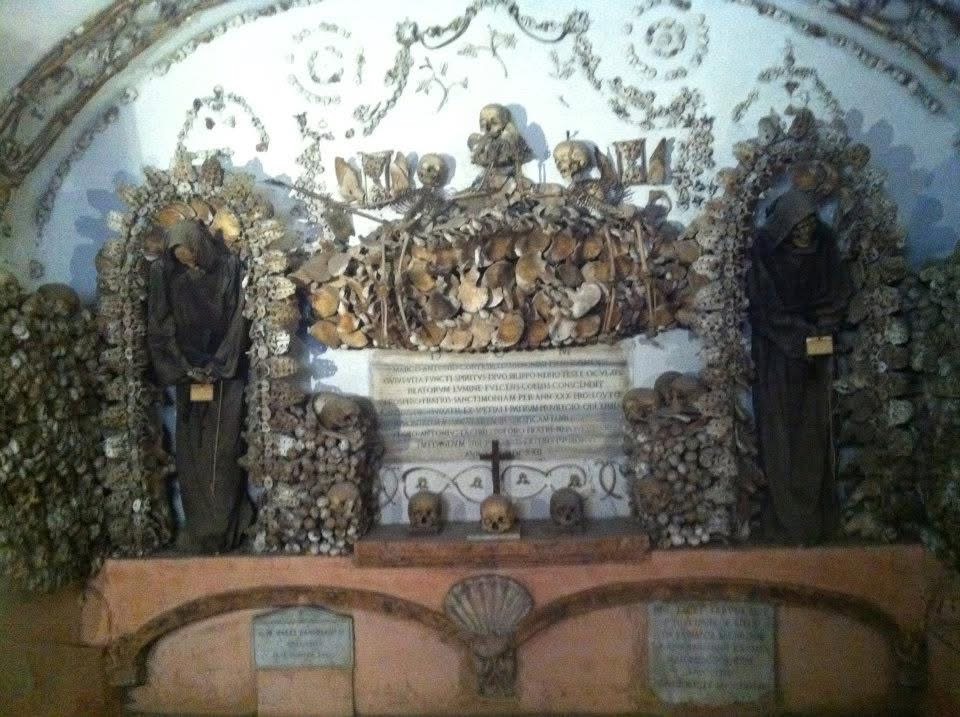
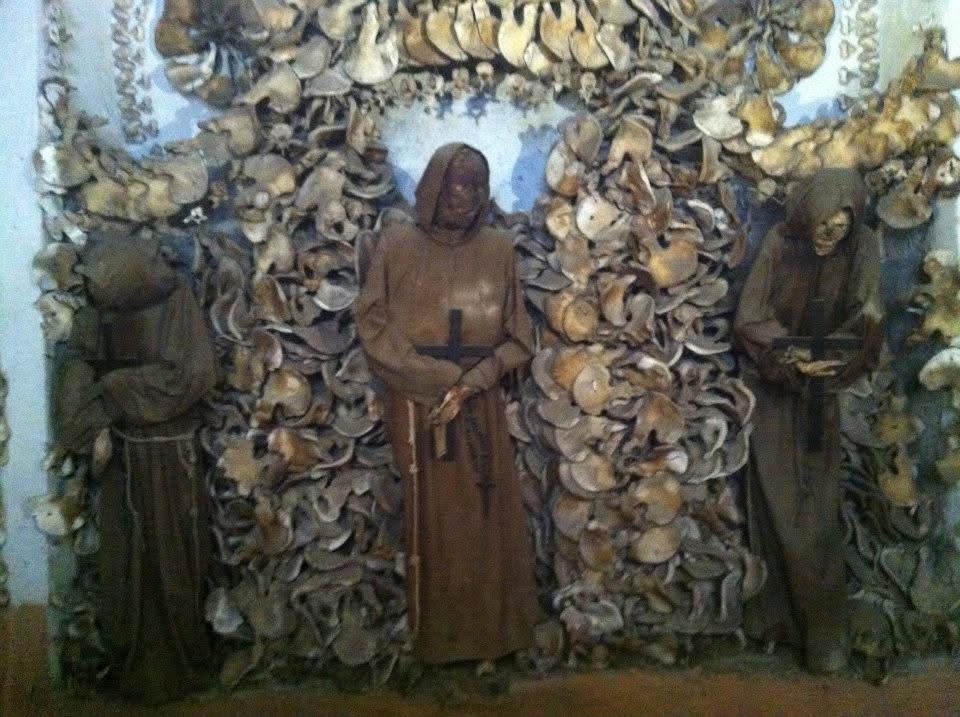
I had never been in the presence of anything like this : actual human bodies, some displayed upright, still dressed in their robes, others reduced to skeletons, with some even retaining traces of dried skin.
I remember having seen a genuine Egyptian mummy displayed behind glass in a New York museum and finding it extraordinary, almost surreal, to be standing in front of an actual human body preserved for centuries.
But this was something else entirely.
Here, we were surrounded by the dead. No glass cases, no protective barriers separating us from their remains. Just us, walking through these little underground chambers among the bodies of people who had died centuries before.
I was absolutely astonished. I had never imagined that such a place existed, let alone that visitors could wander through it so freely.
And yes, it gave me the creeps.
The following photos are not of great quality (old phone + low light) but they are mine.
The first question that naturally comes to mind when visiting the Capuchin Crypt is: why on earth would anyone do this?
To understand, we need to go back to the 17th century.
The Capuchins are a branch of the Franciscan Order, known for their simple lifestyle, humility and devotion to poverty. In 1631, they moved into a newly built convent on Via Veneto, commissioned by the powerful Barberini family. The church of Santa Maria della Concezione was part of this complex, and the crypt beneath it served as the friars’ cemetery.
When they moved in, the Capuchins also brought the remains of deceased brothers from their previous convent. Over the following centuries, the cemetery would become the final resting place of approximately 3,700 people, mostly Capuchin friars, buried between the 17th and 19th centuries.
But here’s where things get interesting
Space was limited, and the friars needed somewhere to bury their newly deceased brothers. Their solution was to exhume older remains, traditionally after around 30 years, and reuse the burial spaces. The bones were then kept in the crypt.
So far, nothing particularly unusual for the time as ossuaries were a practical solution to overcrowded cemeteries throughout Europe.
What is extraordinary is what the Capuchins eventually decided to do with those bones.
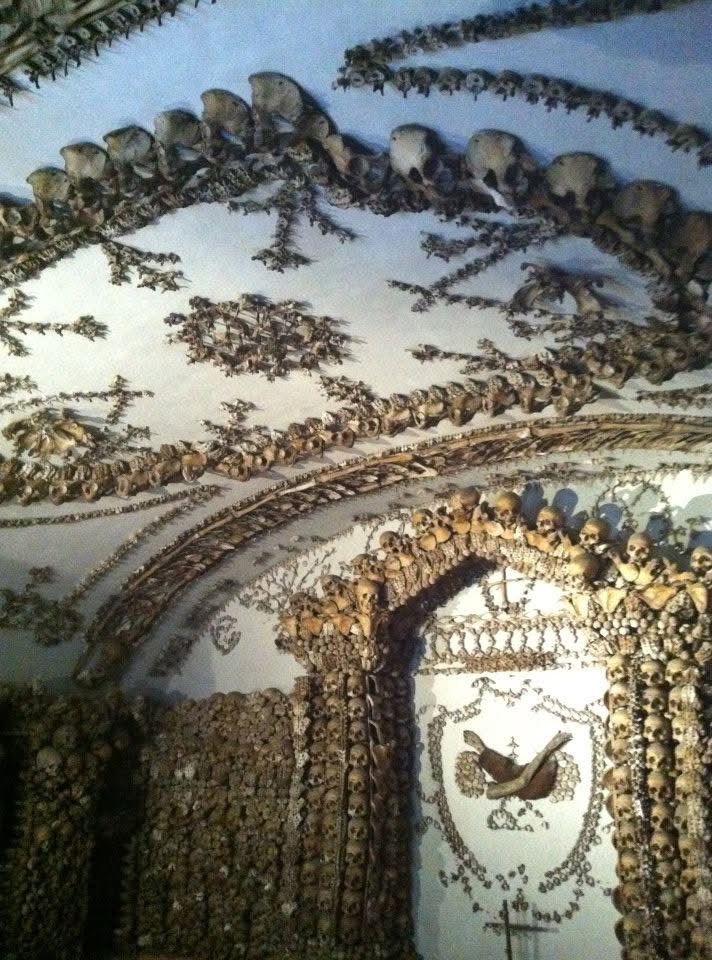
Rather than simply storing them, they began arranging them into elaborate compositions : skulls, femurs, vertebrae, pelvises and jawbones were transformed into arches, floral patterns, crosses, rosettes, architectural ornaments and even chandeliers !
It became an extraordinary work of art.
Who did this ?
Well, historians are not sure… historical evidence suggests that the “artistic transformation” took place during the 18th century, most likely between the 1730s and the 1770s. But the identity of the artist remains uncertain, although 2 Capuchin friars, Father Raffaele da Roma and Father Norberto Baumgartner of Vienna, have been suspected.
The result is an incredible Baroque funerary art, where human remains become both the material and the subject of the artwork.
But why? The answer: Memento mori
Memento Mori, in Latin, means “remember that you must die”.
For the Capuchins, the crypt wasn’t intended as a place of horror, but as a reminder of the fragility of earthly existence and the Christian belief in eternal life. In Franciscan spirituality, death is not simply an ending, but a passage towards something else.
The crypt’s famous inscription sums it up :
What you are now, we once were; what we are now, you shall be.
Quite a message to receive from a few thousand dead people!
The 6 chambers each have their own particular arrangement, and it can feel quite surreal to see decorative patterns made from human arm bones or pelvises…. One contains an altar for celebrating Mass, while another is dedicated to the Resurrection, featuring a painting of Christ raising Lazarus from the dead.
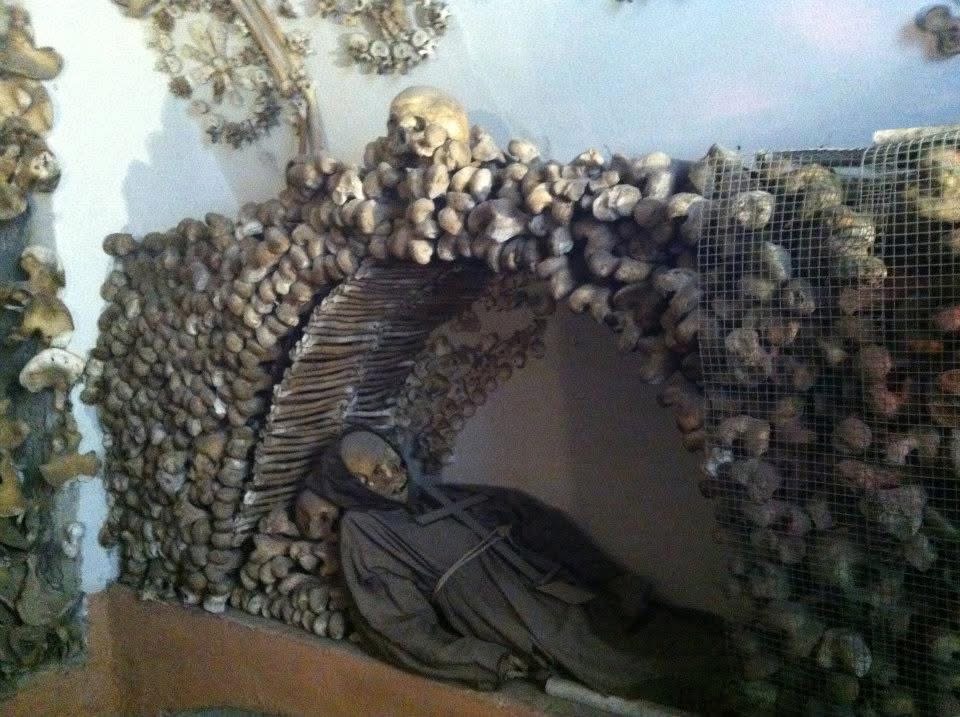
And then there’s perhaps the most unsettling room of all: the Crypt of the Three Skeletons.
Yes, those small skeletons are actually the remains of children.
Three young skeletons are displayed there, including one suspended within an oval arrangement of bones, holding a scythe and a pair of scales that symbolise death and divine judgement. The central skeleton may have belonged to a young member of the Barberini family, but its identity has never been conclusively established.
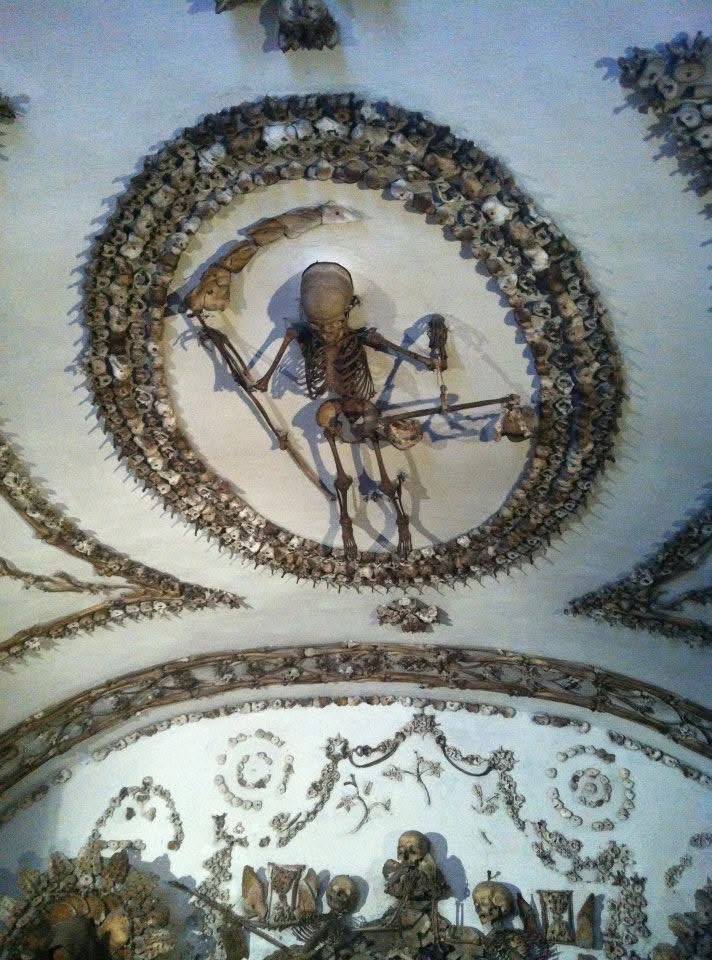
The children were not Capuchin friars. The cemetery also accommodated certain laypeople, including individuals connected to the convent and its benefactors. Their presence serves as another reminder that death makes no distinction between young and old.
About the more complete bodies, still wearing their brown robes, they are displayed in niches among the decorations. Some retain partially preserved tissue, while others have become entirely skeletal.
I wondered about the hygiene aspect of keeping thousands of human remains in such a small space
Scientists have actually studied the crypt, searching for the presence of microorganisms and dust. They wanted to understand the risks involved and how to preserve the remains. In a study published in 2010, the researchers identified biological and chemical risks that required protective measures for restorers. However, they didn’t conclude that visiting the crypt posed a danger to tourists. Phew.
What fascinates me the most is that we’re able to experience such proximity with death in the 21st century
These days, anything that’s over a hundred years old seems to end up behind glass, or sometimes you find out that what you’re looking at is actually a reproduction. But here, you’re entering a crypt full of dead people. Real dead people, who have been there for centuries, and there’s absolutely nothing between you and them. I still find that quite incredible.
I’d visited the Roman catacombs before, and already there, you can’t help thinking about the people who were buried in those tunnels, how long they’ve been there, what their lives were like. I found that fascinating enough. But THIS was something else! You’re not looking at ancient burial spaces and skulls : you’re actually surrounded by the remains themselves. They are everywhere, it’s overwhleming.
There is obviously something a little voyeuristic about putting these bodies on display for tourists to see. I’ve always been torn between the idea that every body should return to the earth as soon as possible, and the thought that, after all, what are a few centuries in the history of the Earth? We’re all going to return to the earth eventually anyway, and even to stardust, long after the Earth itself has been destroyed. Thinking about it this way makes my little discomforts seem rather ridiculous.
In any case, if there’s one thing I have to acknowledge, it’s that the Memento Mori intention of these Franciscan friars certainly had an effect on me, and I suspect on most people who visit the crypt.
“What you are now, we once were; what we are now, you shall be.”

I am a French artist living in New Zealand. I have been passionate about art and history since childhood and was fortunate to grow up surrounded by magnificent artworks, endless curiosities, the timeless scent of old stone, and a continent rich in stories and mysteries.
You can discover my artwork at www.lauraolenska.com or follow my creative journey on Instagram @lauraolenska