
The heart is everywhere. We draw it in the margins of notebooks, send it in messages, wear it as jewellery, tattoo it onto our skin and use it to express emotions with a single glance. It has become one of the most instantly recognisable symbols on Earth, transcending languages, cultures and generations. For centuries, it has represented love, affection, devotion and compassion, even though it bears little resemblance to the organ beating inside our chests.
But how did this simple shape become the universal symbol of love? When did people begin to associate the heart with human emotions? And why did its familiar form emerge instead of an anatomically accurate one?
The answer is far from straightforward. Rather than a single invention or a single moment in history, the symbolic heart appears to be the product of centuries of overlapping influences. Mythology, religion, botany, artistic conventions, scientific discoveries and changing ideas about the human body all seem to have played a part in shaping the icon we know today. Its story is long, complex and, in many ways, still unresolved.
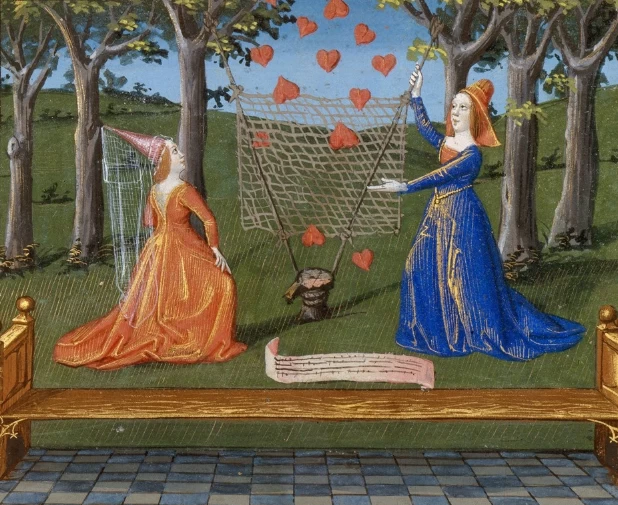
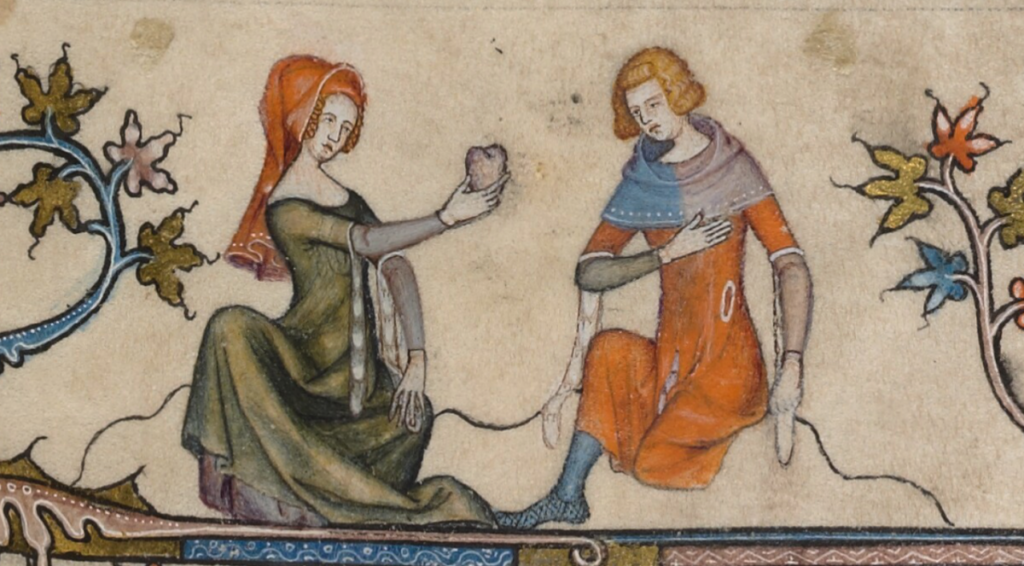
Parchment, 138 folios • Folio 122v • Bibliothèque nationale de France, Paris
Around 1176, the French poet Chrétien de Troyes, widely regarded as the father of Arthurian romance, wrote these words in his romance Cligès:
“De deus cuers avez fet un.”
“You have made one heart out of two.”
The image is immediately familiar. Two hearts joining so completely that they become one. More than eight centuries later, we still use the very same metaphor to describe romantic love.
At the time, this idea was perfectly in tune with the ideals of courtly love, the literary and social movement that emerged in 12th-century Europe. Love was no longer portrayed merely as desire or marriage, but as a profound emotional and spiritual bond between two individuals. The heart naturally became the perfect metaphor for this union.
But this raises another question. If medieval writers were already speaking of hearts as symbols of love, where did the shape itself come from? Who first imagined the two rounded lobes and the pointed base that have become instantly recognisable around the world?
The first clues lead to Ancient Greece
If we are to trace the origins of the heart symbol, our journey most likely begins in Ancient Greece. Surprisingly, it has nothing to do with romance. It begins with plants.
One of the earliest candidates is the ivy leaf. Its elegant outline, with 2 rounded lobes narrowing towards a point, appears frequently on Greek pottery, mosaics and stone carvings. At the time, the motif was purely decorative. No surviving text suggests that anyone associated it with love.
The plant itself, however, carried a rich symbolism. Ivy was sacred to Dionysus, the god of wine, celebration and ecstasy. Because it remained green throughout the year and clung tightly to whatever it climbed, it also came to represent endurance, fidelity and everlasting attachment. Although it would take many centuries before the shape acquired romantic meaning, it is difficult not to notice how closely some stylised ivy leaves resemble the modern heart.
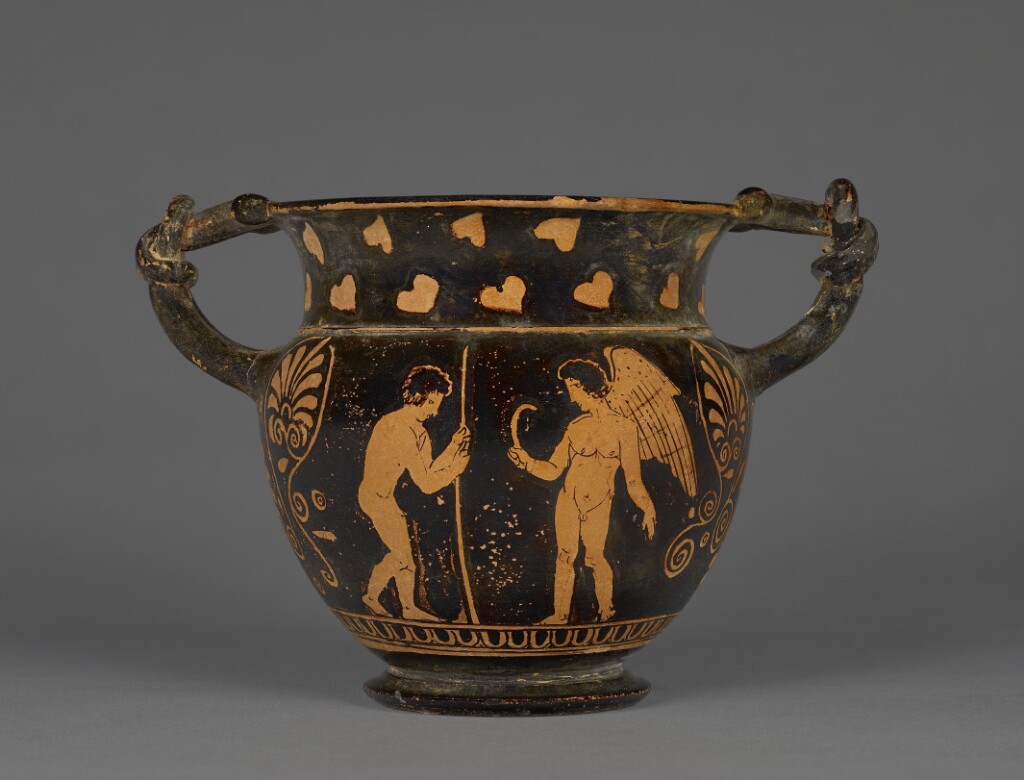
Another fascinating possibility comes from a plant that no longer exists.
Silphium once grew almost exclusively around the Greek colony of Cyrene, in present day Libya. It was one of the most valuable plants of the ancient Mediterranean. Ancient authors praised it as a medicine, a spice and, according to several sources, an effective contraceptive. Demand became so great that the plant was eventually harvested to extinction.
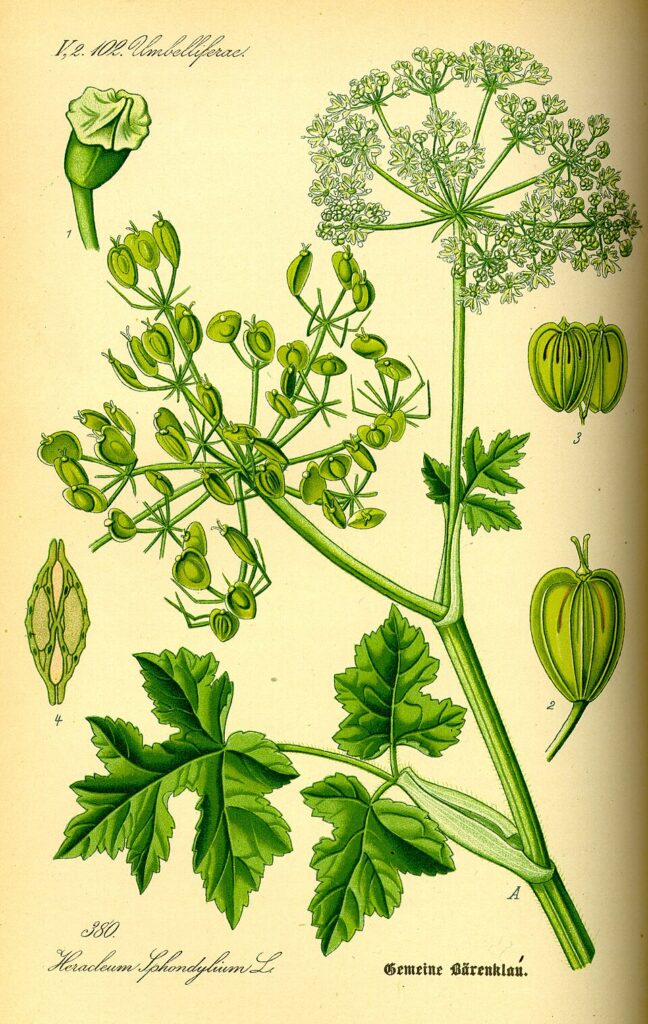
Silphium survives only through written descriptions and the coins of Cyrene. Several of those coins depict its seed pod, whose outline is strikingly similar to the heart symbol we recognise today. Because of the plant’s association with sexuality and fertility, some historians have suggested that its seed may have influenced the future symbol of love.
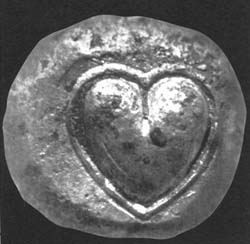
It is an attractive theory, but there is no definitive proof. No ancient author ever stated that the heart symbol originated from silphium. Still, the resemblance is remarkable enough that the hypothesis continues to intrigue historians today.
Aristotle, before the heart became the symbol of love
Long before lovers exchanged hearts, philosophers believed that our emotions actually lived inside them.
In the 4th century BC, Aristotle described the heart as the centre of human life. To him, it was the source of thought, sensation, desire and emotion. The brain, by comparison, served a far more modest purpose. He believed it simply cooled the blood. (Read about the cardiocentric hypothesis)
His conclusions were wrong, but their influence was immense. For nearly 2000 years, much of Europe accepted the idea that the heart, not the brain, was the organ that defined our humanity. Courage came from the heart. Fear came from the heart. Love came from the heart.
Modern anatomy eventually proved otherwise, yet language refused to change. We still speak of broken hearts, heartfelt apologies, losing heart and learning something by heart. Science rewrote our understanding of the body, but culture never abandoned the symbolism.
The Middle Ages slowly gave the heart its familiar shape
One of the greatest paradoxes in the history of the heart is that its iconic silhouette emerged at a time when very few people knew what the human heart actually looked like.
Throughout most of the Middle Ages, anatomical knowledge relied on ancient texts rather than direct observation. Human dissections were rare, and artists had little interest in scientific accuracy. Their goal was to communicate ideas, not anatomy.
Early illustrations often show elongated hearts resembling leaves or pine cones, with the pointed end facing upwards. Over the centuries, artists gradually refined the design. The shape became more symmetrical, the upper lobes became rounder and, eventually, the point was turned downwards.
By the 14th century, manuscripts such as the Roman d’Alexandre already contain hearts that look surprisingly modern. Their resemblance to the organ inside the human body is limited, but that no longer mattered. A recognisable visual language had begun to emerge.
The first heart ever offered
One of the most important milestones appears in a French manuscript known as the Roman de la Poire, produced around the middle of the 13th century.
Its most famous miniature depicts a kneeling lover presenting his own heart to a lady. It is one of the earliest surviving images in which the heart itself becomes a gift, a physical symbol of complete devotion.
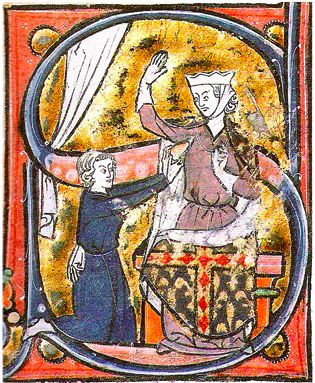
The shape is still different from the one we know today. It is longer, less symmetrical and its point still faces upwards. Yet the message is unmistakable. Love has acquired an image.
Only a few decades earlier, around 1176, Chrétien de Troyes had already written in Cligès, “De deus cuers avez fet un“, or, “You have made one heart out of two.” The metaphor was already deeply rooted in medieval literature. Artists were now beginning to give it a face.
Leonardo da Vinci finally looked inside
While artists perfected the symbol, scientists were beginning to understand the organ itself.
Among them, Leonardo da Vinci stands apart. Around 1507, fascinated by anatomy, he dissected human cadavers and produced some of the most accurate drawings of the heart ever made, drawings that remained unrivalled for centuries. He carefully observed its chambers, valves and blood vessels, making discoveries that would not be fully appreciated for centuries. Before his death in 1519, he had already uncovered many of the principles governing blood flow through the heart.
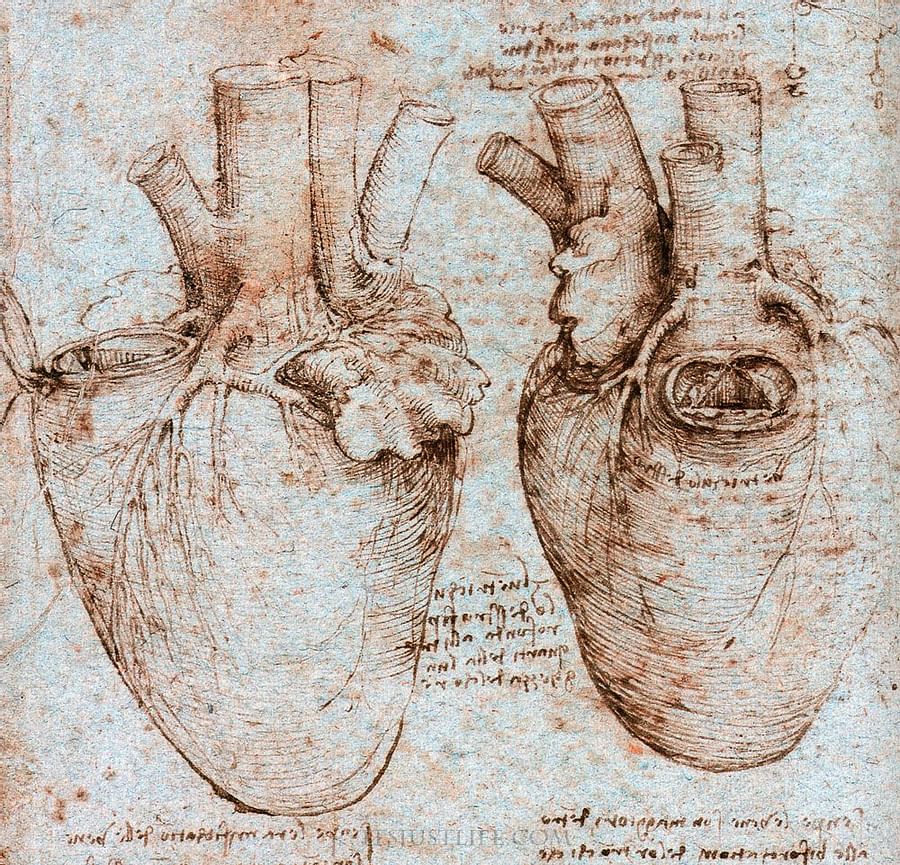
Ironically, his work changed almost nothing about the symbol.
By the Renaissance, the stylised heart had already become part of Europe’s visual culture. It no longer belonged to anatomy. It belonged to imagination.
The Church embraced the heart
As medieval Europe became increasingly shaped by Christianity, the heart acquired another meaning that would profoundly influence its future.
It became the symbol of divine love.
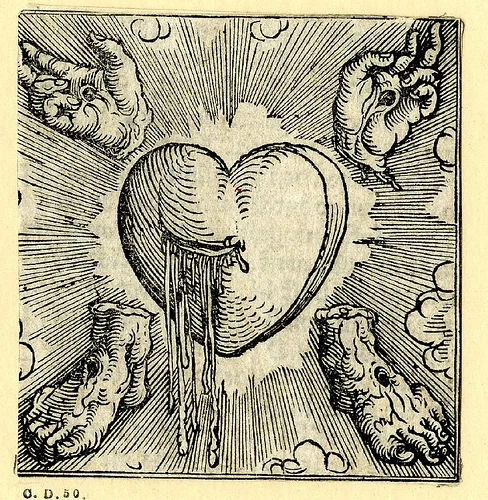
Illuminated manuscripts gradually introduced heart shaped motifs into scenes of prayer and devotion, but the greatest transformation came with the growing devotion to the Sacred Heart of Jesus.
From the 17th century onwards, artists depicted Christ’s heart burning with flames, surrounded by a crown of thorns, pierced by suffering and radiating light. It represented compassion, sacrifice and unconditional love.
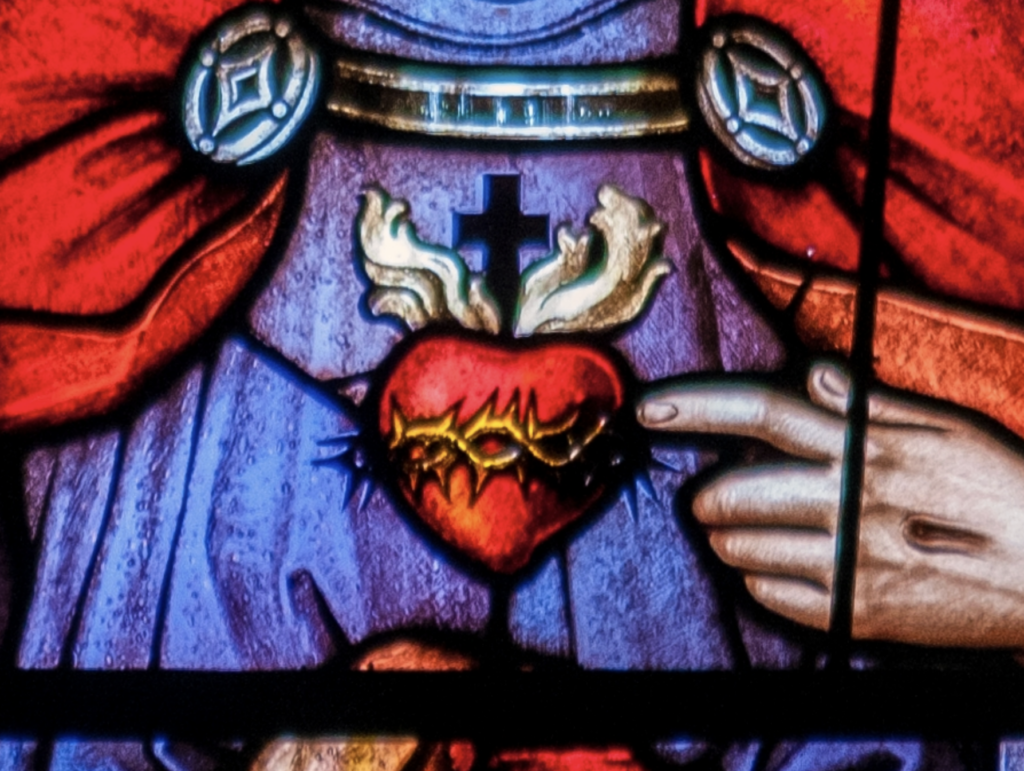
This religious imagery helped establish visual conventions that still feel familiar today. The heart became vividly red, almost alive… Whether expressing God’s love for humanity or human love for another person, the heart had become the natural vessel of the deepest feelings.
A deck of cards carried the heart into every home
If medieval manuscripts introduced the heart to a privileged few, playing cards introduced it to everyone.
Towards the end of the 15th century, French card makers standardised the four suits that remain familiar today: hearts, diamonds, clubs and spades. Their simple geometric designs made them easier to carve, print and reproduce than the more elaborate German and Italian suits that had come before.
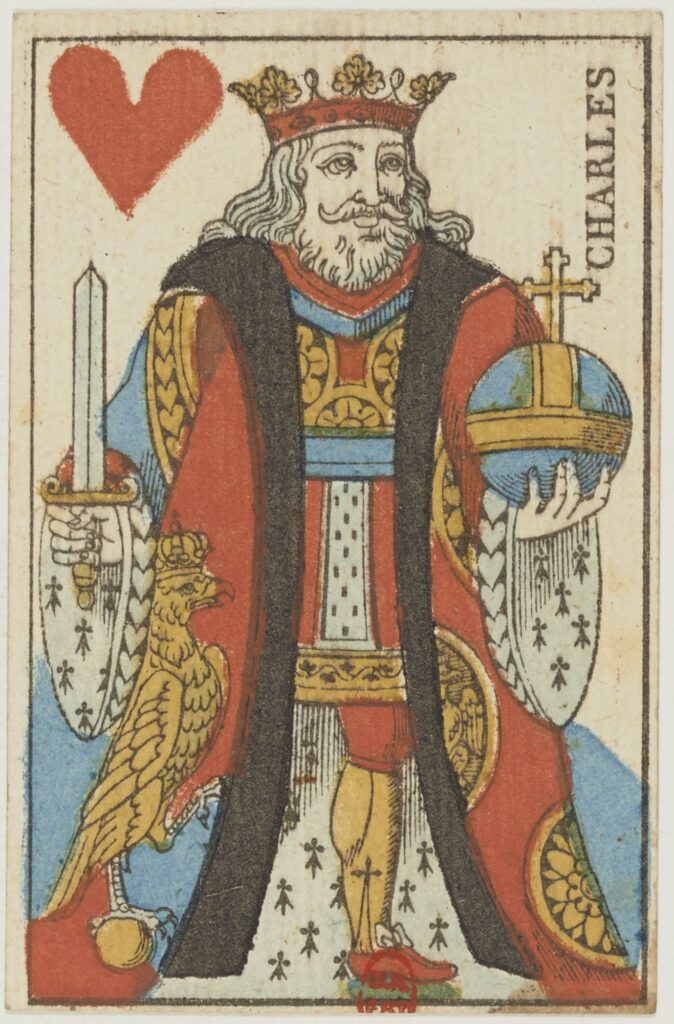
The French pattern, which became the dominant design in France around 1780 and was known as the portrait officiel, gave each face card a historical or mythical identity. The King of Hearts was represented as Charlemagne, while the other kings embodied figures such as David, Caesar and Alexander the Great. Every time a deck of cards was shuffled, one of the most recognisable symbols in Europe appeared alongside these legendary rulers.
From that moment on, the heart appeared on millions of playing cards circulating across Europe. It was held in royal courts, village inns and family homes alike. Few symbols enjoyed such widespread exposure.
By the 19th century, the transformation was complete
The heart appeared everywhere, from playing cards and jewellery to decorative arts and the passionate paintings of many artists. It increasingly came to embody emotional intensity. It became the organ of love, certainly, but also of grief, desire, courage and suffering. To be heartbroken, to wear one’s heart on one’s sleeve, or to have a change of heart, these expressions all reveal how deeply the symbol had entered everyday language.
The heart also acquired an unmistakable sensual dimension. Turn it upside down and its curves suggest a generous pair of breasts or rounded buttocks, a resemblance that artists, designers and advertisers have never failed to notice.
The twentieth century only reinforced the heart’s universality. It spread through advertising, graphic design, fashion and contemporary art, until it became impossible to separate the symbol from the emotions it represents. Few images are recognised as instantly, or understood as universally.
No one knows exactly who first drew the heart. Yet today, almost every human being understands its meaning without a single word.
🫶

I am a French artist living in New Zealand. I have been passionate about art and history since childhood and was fortunate to grow up surrounded by magnificent artworks, endless curiosities, the timeless scent of old stone, and a continent rich in stories and mysteries.
I write these articles first and foremost for myself. Each one takes hours of research and becomes a journey through time, places and ideas. They are also a wonderful excuse to improve my written English, and if they happen to spark your curiosity too, then I’m delighted you’ve found your way here.
You can discover my artwork at www.lauraolenska.com or follow my creative journey on Instagram @lauraolenska